News

Papers for Chicago: Concurrency

The start of my series about the papers for the upcoming Chicago meeting, starting with C for Concurrency:

C++ Papers for Chicago: Part 1 -- Concurrency

by Jens Weller

From the article:

As I did write a series about the papers for Bristol, this is the start of the series for Chicago, as at the end of this month the C++ committee will meet again for standardization. I try to...

GoingNative 2013 videos now available

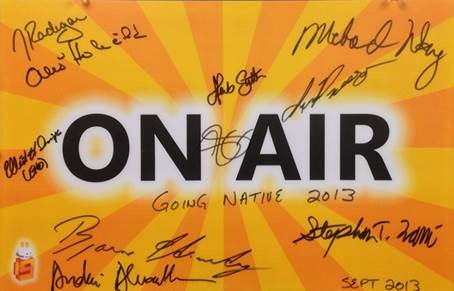
gn13-signed.jpgThe videos from last week's GoingNative 2013 are now posted and available for on-demand viewing on Channel 9. Over 20 hours of live presentations cover everything from the latest in the language and the standard library, to C++'s evolution and momentum across the industry, to style guidance and the latest in C++11/14 features, to the optimizer and code generation for modern processors like Haswell, to experience in specific domains and platforms, and more.

GN'13 was a huge success thanks to Channel 9 and all the speakers, including headliner Bjarne Stroustrup and esteemed speakers Sean Parent, Andrei Alexandrescu, Stephan T. Lavavej, Jim Radigan, Herb Sutter, Scott Meyers, Michael Wong, Chandler Carruth, Ales Holecek, Elliot Omiya, Deon Brewis, Niklas Gustafsson, Eric Brumer, and Garrett Serack. Thanks to everyone who came to present and participate in this year's event.

The GN folks and others are working hard on next year. Stay tuned for more information in the months ahead. In the meantime, enjoy this material and be sure to share the ones you find most interesting and useful with your friends and colleagues.

Value-initialization with C++ -- Andrzej KrzemieĊ„ski

Do you know what value-initialization means, and why it's simpler in C++11?

Value-initialization with C++

by Andrzej Krzemieński

From the article:

Some time ago, I showed how boost::value_initialized can be used to value-initialize objects in generic components in C++03. In C++11 it is practically not necessary. C++11 gives you a way to force value-initialization of your objects in any possible initialization context.

Are you familiar with term “value initialization”? It is sometimes confused with “default-initialization”...

LLVM Toolchain on Windows -- Chandler Carruth

Have you been waiting to use clang until it works on Windows? Your wait is over. The inimitable Chandler Carruth from Google announced an honest-to-god Windows installer for the LLVM toolchain that integrates into Visual Studio, and links with the native C++ runtime.

A Path Forward for an LLVM Toolchain on Windows

by Chandler Carruth

[...] we’ve been driving many of the efforts around compatibility with Visual Studio and native Windows C++ code in Clang and LLD (the LLVM linker). Today, as announced at my GoingNative 2013 talk, we are able to build a trivial C++ application that in turn links against native C++ libraries and uses them in real, interesting ways. This is a huge milestone for the project, and something we’re really excited to be talking more about.

Continue reading...

Planetary: First Smithsonian curation of code created using C++ and Cinder-- S Chan & A Cope

The first piece of code acquired by the Smithsonian's Cooper-Hewitt National Design Museum -- "Planetary", written in C++.

Planetary: collecting and preserving code as a living object

Posted by Sebastian Chan & Aaron Cope on Monday August 26, 2013

From the article:

Cooper-Hewitt has just acquired its first piece of code. Although the collection has objects that are the end result of algorithmic processes, notably Patrick Jouin's 3D printed chair, Solid C2, this is the first time that code, itself, has been collected.

Almost all contemporary design practice involves digital processes -- from the ubiquitous Adobe design software to CAD packages used by product designers and architects, to the simple day-to-day office management and accounting software -- it would be difficult to find a designer who lives entirely 'off the grid.’ Despite this, design museums have been slow to start to add software to their permanent collections.

Some of this reticence to collect digital objects stems from deep uncertainties as to how to preserve and present such objects to future visitors and future scholars. But for Cooper-Hewitt these uncertainties have been a strong driver to experiment.

So, here we have Planetary.

Planetary is an iPad application written in C++ using the Cinder framework. Planetary offers an alternative music player application for the iPad that visualizes your music collection as a series of celestial bodies. Songs are moons, albums are planets, artists are suns—and the orbits of each are determined by the length of albums and tracks. Their brightness represents their frequency of playback.

Continue reading...

Tales of C++ - Episode Six: Boollocks--K-ballo

Tales of C++, Episode 6:

Boollocks

by K-Ballo

From the article:

In the beginning there was no bool. And C++ said "let there be bool", and there was bool...

The Boolean data type is an integral type with only two values: true and false, intended to represent the truth values of logic and Boolean algebra. With only two values, what can possibly go wrong?

Continue reading...

GoingNative will be livestreamed this week: Sep 4-6

The GoingNative 2013 conference starts Wednesday and is just about sold out. A few seats remain, so register now (or get on the waitlist in case there's a last-minute cancellation you can snag).

It's decidedly desirable to be physically in the room to get the full experience, and hundreds of people from over 10 countries are already on their way. But if you can't come in person to Redmond, WA, USA for this week's C++ fest, you'll be glad to know the talks will be livestreamed as well on the Channel 9 homepage. The streaming is compatible with all major platforms. For those of you around the world, please note that the talk times are in North American Pacific Daylight Time.

Talks include the following, including both full-length talks and a number of 20- and 30-minute "nuggets."

Day 1: Wed Sep 4

  • Opening Keynote: The Essence of C++ -- With Examples in C++84, C++98, C++11, and C++14 (Bjarne Stroustrup)
  • C++ Seasoning (Sean Parent)
  • Writing Quick Code in C++, Quickly (Andrei Alexandrescu)
  • Don’t Help the Compiler (Stephan T. Lavavej)
  • Compiler++ (Jim Radigan)

Day 2: Thu Sep 5

  • Day 2 Keynote: One C++ (Herb Sutter)
  • rand() Considered Harmful (Stephan T. Lavavej)
  • An Effective C++11/14 Sampler (Scott Meyers)
  • C++14: Through the Looking Glass (Michael Wong)
  • The Care and Feeding of C++’s Dragons (Chandler Carruth)
  • Interactive Panel: Ask Us Anything! (speakers)

Day 3: Fri Sep 6

  • Everything You Always Wanted to Know About Threading (But...) (Elliot H. Omiya)
  • The Way of the Exploding Tuple (Andrei Alexandrescu)
  • To Move or Not to Move: That is the Question (Michael Wong)
  • Bringing await to C++ (Deon Brewis)
  • A C++ REST SDK: OSS web services on Windows and Linux (Niklas Gustafsson)
  • Compiler Confidential (Eric Brumer)
  • Find-Build-Share-Use: Using NuGet for C and C++ Libraries (Garrett Serack)
  • My Favorite C++ 10-Liner (Herb Sutter)


C++ Conferences This Fall

I've created a short overview over the C++ Conferences this Fall:

  • Going Native (Seattle, 4.th-6.9) SOLD OUT
  • International Workshop on OpenMP (Canberra (AU), 16-18.9)
  • (not a conference, but...) Fall ISO C++ meeting (Chicago, 23-28.9)
  • QtDevDays Europe (Berlin, 7th - 9.10)
  • QtDevDays US (San Francisco, 6th-8.11)
  • Meeting C++ 2013 (Düsseldorf, 8th-9.11)
  • C++ and Beyond (Snoqualmie Falls (WA/US), 9th-12.12) SOLD OUT

More details at Meeting C++

by Jens Weller