
Overload 126 is now available
ACCU's Overload journal of April 2015 is out. It contains C++ related articles.
Overload 126
From the journal:
Alternatives to Singletons and Global Variables: Global variables and Singletons are usually considered bad. Bob Schmidt summarises some alternatives. by Bob Schmidt
Resource Management with Explicit Template Specializations: RAII is a useful idiom. Pavel Frolov presents a powerful extension using explicit template specialization. by Pavel Frolov
Variadic and Variable Templates: C++11 and 14 offer new features for Variadic and Variable templates. Peter Sommerlad showcases the compile-time possibilities they offer. by Peter Sommerlad
iterator_pair – A Simple and Useful Iterator Adapter: Can you form a new contain from two others? Vladimir Grigoriev reminds us how to write an iterator. by Vladimir Grigoriev
 While we wait for CppCon 2015 in September, we’re featuring videos of some of the 100+ talks from CppCon 2014. Here is today’s feature:
 Episode 6 of CppCast, the only podcast by C++ developers for C++ developers. In this episode Paul Fultz II joins Rob Irving to talk about his upcoming C++Now talk which will focus on the two C++ libraries hes created Fit and Tick.
 While we wait for CppCon 2015 in September, we’re featuring videos of some of the 100+ talks from CppCon 2014. Here is today’s feature:
 While we wait for CppCon 2015 in September, we’re featuring videos of some of the 100+ talks from CppCon 2014. Here is today’s feature:
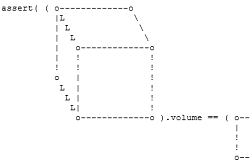 Demonstrating the power of C++11 user-defined literals: