
2026 Annual C++ Developer Survey "Lite"

The annual global C++ developer survey is now open:
2026 Annual C++ Developer Survey "Lite"
Please share your feedback in this annual 10-minute survey to help inform C++ standardization and C++ tool vendors. This is the biggest opportunity we all have each year to make our voices heard and help improve our industry and community!
A summary of the results, including aggregated highlights of common answers in the write-in responses, will be posted publicly here on isocpp.org and shared with the C++ standardization committee participants and C++ tool vendors to help inform C++ evolution and tooling.
The survey closes in one week.
Thank you for participating and helping to inform our committee and community.
 Registration is now open for CppCon 2026! The conference starts on September 12 and will be held
 Registration is now open for CppCon 2026! The conference starts on September 12 and will be held
  Registration is now open for CppCon 2026! The conference starts on September 12 and will be held
 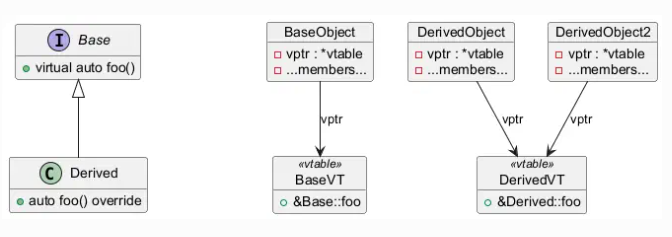 Ever wondered why your clean, object-oriented design sometimes slows things down? This piece breaks down how virtual dispatch impacts performance—and how techniques like devirtualization and static polymorphism can eliminate that overhead entirely.
 Registration is now open for CppCon 2026! The conference starts on September 12 and will be held
  Registration is now open for CppCon 2026! The conference starts on September 12 and will be held
