
Structured iteration
It is relatively easy to get your for-loops wrong. Luckily, C++ offers more and more bug-proof alternatives.
Structured iteration
by Andrzej Krzemieński
From the article:
These problems do not occur when you use the range-based for-loop.
This C++11 addition, apart from other conveniences, is a safety feature (as in language-safety): it is very hard to use it incorrectly. It is not flexible, or versatile. You have to pass it a range, you have to give a name to an element referenced in each iteration step. There is no "control variable" (like i), so you cannot get the operations on it wrong. A number of bugs are prevented simply by employing a range-based loop.
But what if my iteration is more complicated? What if I need to visit my elements in reverse?
 aster Language Engine, Unique Constexpr Debugger, DAP Support, and Much More
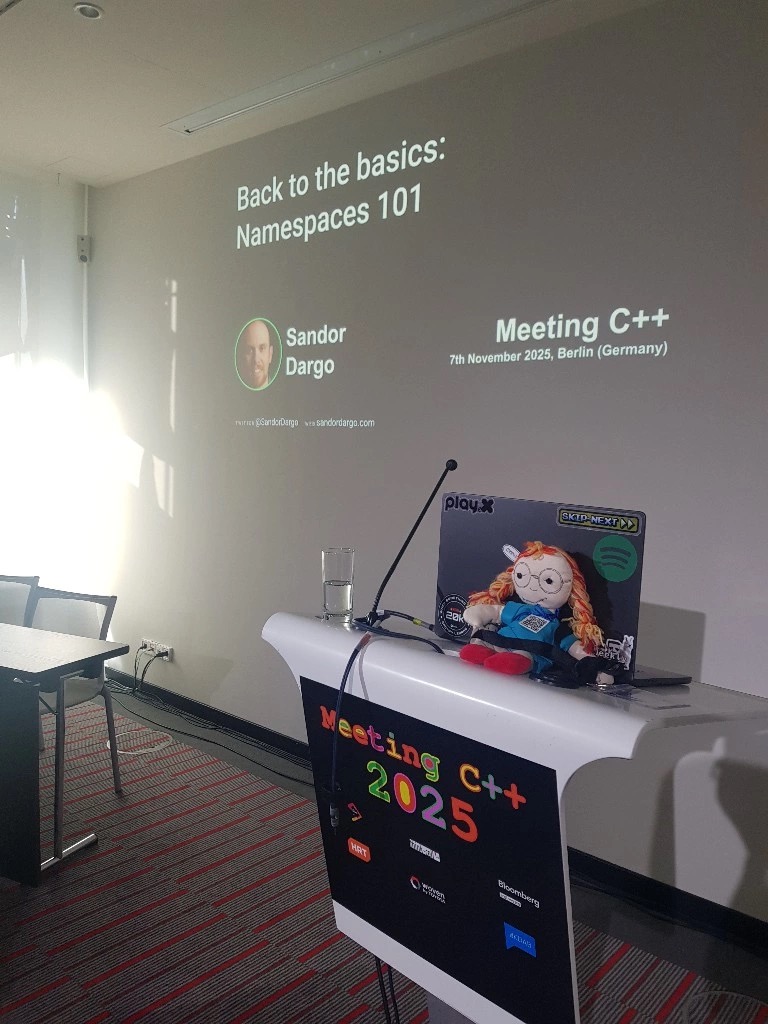 What a year I had! One more conference, one more trip report! I had the chance to go to Meeting C++ and give not just one but two talks!
 C++11 gave us
  The Budapest C++ Meetup was a great reminder of how strong and curious our local community is. Each talk approached the language from a different angle — Jonathan Müller from the perspective of performance, mine from design and type safety, and Marcell Juhász from security — yet all shared the same core message: understand what C++ gives you and use it wisely.
 When working with legacy or rigid codebases, performance bottlenecks can emerge from designs you can’t easily change—like interfaces that force inefficient map access by index. This article explores how a simple
  A missing
 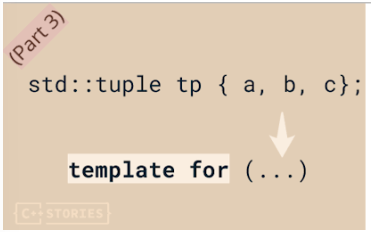 In this final part of the tuple-iteration mini-series, we move beyond C++20 and C++23 techniques to explore how C++26 finally brings first-class language support for compile-time iteration. With structured binding packs (P1061) and expansion statements (P1306), what once required clever template tricks can now be written in clean, expressive, modern C++.