Comparison and Inheritance -- Andrew Koenig
Comparison and Inheritance
by Andrew Koenig
We continue last week's discussion of comparison functions by thinking about how to compare objects from different parts of an inheritance hierarchy...

June 17-20, Folkestone, UK
September 12-18, Aurora, CO, USA
November 16-21, Búzios, Rio De Janeiro, Brazil
November 26-28, Berlin, Germany
By Blog Staff | Feb 25, 2013 03:11 PM | Tags: intermediate
Comparison and Inheritance
by Andrew Koenig
We continue last week's discussion of comparison functions by thinking about how to compare objects from different parts of an inheritance hierarchy...

By Blog Staff | Feb 25, 2013 08:55 AM | Tags: basics
People new to C++11 often hear about move semantics, and expect that they have to do work to take advantage of it. That's often not true, and often the cleanest, simplest code that doesn't even mention
move or && anywhere is just what you want -- that's C++11, clean, safe, and faster than ever.
Perhaps the most common case (and question) involves returning values from functions. The new rule for modern C++ style: Just return even big objects by value, and move Just Happens.
It just came up again on StackOverflow:
C++11 rvalues and move semantics confusion
The link skips straight to Howard Hinnant's clear and correct answer.
Sometimes we just try too hard, because we expect efficient programming not to be easy. Welcome to C++11.
By Blog Staff | Feb 24, 2013 12:59 PM | Tags: None
Another step forward in C++ community libraries, joining others including Facebook's and Microsoft's OSS C++ work. This from last.fm last week:
All our tools are belong to you (last.fm)
by Marcus Holland-Moritz
Today we’re releasing moost, a C++ library with all the nice little tools and utilities our MIR team has developed over the past five years. If you’re a C++ developer yourself, you might notice that moost sounds quite similar to boost, and that’s on purpose. moost is the MIR team’s boost, there is hardly a project in our codebase that doesn’t depend on one or more parts of moost.
There are a lot of different things in moost...
By Blog Staff | Feb 24, 2013 07:34 AM | Tags: experimental
During the C++11 standards development cycle, much work was done on a feature called "concepts" which aimed at providing systematic constraints on templates. Concepts was deferred from C++11 for lack of time to complete it, but work has continued.
In January 2012, the results of a major "concepts summit" were published as a 133-page report titled "A Concept Design for the STL" (WG21 paper N3351).
Now, a draft of new paper is available proposing a very useful subset of concepts, dubbed "Concepts Lite", for near-term consideration including at the spring ISO C++ meeting in Bristol, UK, this April. For example, imagine writing this template:
template<Sortable Cont> void sort(Cont& container);
and when you call it like this:
list<int> lst = ...; // oops, bidirectional iterators sort(lst); // today, results in very long "template spew" error message
getting this short and non-cryptic error message:
error: no matching function for call to ‘sort(list<int>&)’
sort(l);
^
note: candidate is:
note: template<Sortable T> void sort(T)
void sort(T t) { }
^
note: template constraints not satisfied because
note: 'T' is not a/an 'Sortable' type [with T = list<int>] since
note: 'declval<T>()[n]' is not valid syntax
That's an actual error message from the prototype GCC implementation linked below.
We're very excited about this feature and its continued progress. Here are links to the draft of the new paper:
Concepts Lite: Constraining Templates with Predicates (PDF) (Google Docs)
From the Introduction:
In this paper, we introduce template constraints (a.k.a., “concepts lite”), an extension of C++ that allows the use of predicates to constrain template arguments. The proposed feature is minimal, principled, and uncomplicated. Template constraints are applied to enforce the correctness of template use, not the correctness of template definitions. The design of these features is intended to support easy and incremental adoption by users. More precisely, constraints:
- allow programmers to directly state the requirements of a set of template arguments as part of a template’s interface,
- support function overloading and class template specialization based on constraints,
- fundamentally improve diagnostics by checking template arguments in terms of stated intent at the point of use, and
- do all of this without any runtime overhead or longer compilation times.
This work is implemented as a branch of GCC-4.8 and is available for download at http://concepts.axiomatics.org/~ans/. The implementation includes a compiler and a modified standard library that includes constraints. Note that, as of the time of writing, all major features described in this report have been implemented.
Related links:
By Blog Staff | Feb 21, 2013 09:25 AM | Tags: intermediate
To accept a functor as a parameter, when should you:
std::function, which adds an indirection, vs.template<class Func> and accept a Func, which can bind directly to whatever is passed?std::function vs template
Thanks to C++11 we received the
std::functionfamily of functor wrappers. Unfortunately, I keep hearing [...] that they are horribly slow. [... Is the right recommendation] thatfunctions can be used as de facto standard of passing functors, and in places where high performance is expected templates should be used?
By Blog Staff | Feb 15, 2013 10:38 AM | Tags: intermediate basics
Andrzej continues this month with more interesting thoughts on preconditions.
Preconditions, Part 2
by Andrzej Krzemieński
In this post I will continue sharing my thoughts on preconditions. It will cover some philosophy behind the concept of preconditions (and bugs), and investigate the possibility of employing the compiler to verify some preconditions. Many people provided a useful feedback on my previous post. I will also try to incorporate it into this post.
Note that this article diverges from recommended practice in one way... it hints at the idea of throwing exceptions to report precondition violations. Instead, per C++ Coding Standards and other established guidance, prefer to use assertions to check preconditions: precondition violations are just bugs in the caller's code that should be caught at test time, assertions cause no overhead in production, and assertions fire immediately at the line of code that contains the bug without losing the call stack and other local context. Using assertions is still considered to be a best practice.
By Blog Staff | Feb 14, 2013 09:39 AM | Tags: basics
Learning Modern C++: An Interview with Barbara Moo
by Jeff Martin
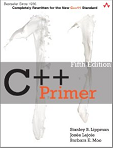
The popularity of C++ has varied throughout the years since its introduction in the 1980s. The rise of managed languages like Java and C# along with the emergence of scripting languages like JavaScript, Python, and Ruby has affected C++'s adoption. Yet many supporters like C++ for the control, raw power, and speed that it offers. C++11 promises to bring that power to programmers in a more efficient manner, and the changes it introduces illustrate how much the language has grown in the past 30 years. Programmers looking to learn about C++11 or perhaps sample C++ for the first time would do well to try C++ Primer, 5th Edition by Stanley B. Lippman, Josée Lajoie, and Barbara E. Moo. InfoQ had the opportunity to speak with Ms. Moo about her new book and the C++ language as a whole.
By Blog Staff | Feb 13, 2013 06:41 PM | Tags: intermediate advanced
Here's a recent highlight from the pre-Portland mailing that you might have missed:
Open and Efficient Type Switch for C++
Yuriy Solodkyy, Gabriel Dos Reis, Bjarne Stroustrup
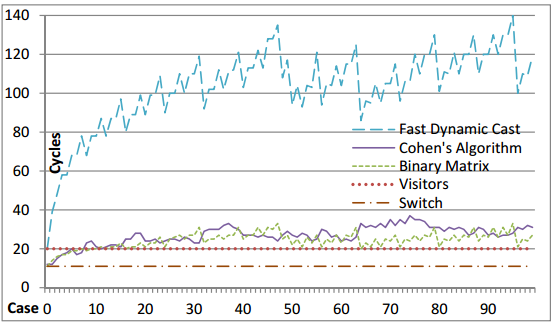
... we implement a type switch construct as an ISO C++11 library, called Mach7. This library-only implementation provides concise notation and outperforms the visitor design pattern. ... For closed sets of types, its performance roughly equals equivalent code in functional languages, such as OCaml and Haskell.
C++ is a powerful library-building language. Whenever possible, we prefer to add new functionality as a library rather than in the language. This is an excellent example of where a C++ library-only solution can get equivalent performance to the language support included in some popular functional languages.
By Blog Staff | Feb 11, 2013 11:42 AM | Tags: intermediate
Herb Sutter's biggest and deepest talk at C++ and Beyond 2012 is now online:
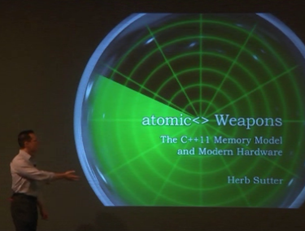
atomic<> Weapons: The C++ Memory Model and Modern Hardware
by Herb Sutter
This session in one word: Deep.
It's a session that includes topics I've publicly said for years is Stuff You Shouldn't Need To Know and I Just Won't Teach, but it's becoming achingly clear that people do need to know about it. Achingly, heartbreakingly clear, because some hardware incents you to pull out the big guns to achieve top performance, and C++ programmers just are so addicted to full performance that they'll reach for the big red levers with the flashing warning lights. Since we can't keep people from pulling the big red levers, we'd better document the A to Z of what the levers actually do, so that people don't SCRAM unless they really, really, really meant to.
Topics Covered:
- The facts: The C++11 memory model and what it requires you to do to make sure your code is correct and stays correct. We'll include clear answers to several FAQs: "how do the compiler and hardware cooperate to remember how to respect these rules?", "what is a race condition?", and the ageless one-hand-clapping question "how is a race condition like a debugger?"
- The tools: The deep interrelationships and fundamental tradeoffs among mutexes, atomics, and fences/barriers. I'll try to convince you why standalone memory barriers are bad, and why barriers should always be associated with a specific load or store.
- The unspeakables: I'll grudgingly and reluctantly talk about the Thing I Said I'd Never Teach That Programmers Should Never Need To Now: relaxed atomics. Don't use them! If you can avoid it. But here's what you need to know, even though it would be nice if you didn't need to know it.
- The rapidly-changing hardware reality: How locks and atomics map to hardware instructions on ARM and x86/x64, and throw in POWER and Itanium for good measure – and I'll cover how and why the answers are actually different last year and this year, and how they will likely be different again a few years from now. We'll cover how the latest CPU and GPU hardware memory models are rapidly evolving, and how this directly affects C++ programmers.
Herb adds on his blog:
Note: This is about the basic structure and tools, not how to write lock-free algorithms using atomics. That next-level topic may be on deck for this year’s C++ and Beyond in December, we’ll see...
By Blog Staff | Feb 11, 2013 10:41 AM | Tags: intermediate basics advanced
The final dates and location are now set for C++ and Beyond 2013 with Scott Meyers, Herb Sutter, and Andrei Alexandrescu:
December 9-12, 2013 in beautiful Snoqualmie, Washington, USA.
From Scott Meyers' announcement:
About a month ago, I posted tentative dates for C&B 2013. I cautioned that there was no contract yet, and I’m glad I did, because shortly thereafter we discovered an off-by-one scheduling snafu. As a result, the dates are not the ones I posted earlier, they’re a day later: Monday evening, December 9, through Thursday, December 12.The inital C&B in 2010 was held at the Salish Lodge and Spa in Snoqualmie, Washington, USA. In 2011, we had a larger group in a larger venue, and last year we bumped up the numbers again. Growth was ours, it seemed, but we sensed that C&B was looking more like a conventional conference and less like the unique event we had originally envisioned. For 2013, we decided to return to our roots, both geographically and organizationally.
C&B 2013 will return to the Salish Lodge and Spa in Snoqualmie, Washington (not far from Seattle). Enrollment will again be limited to the capacity of the ballroom (~64 attendees). Scott will again lead lunchtime walks. Evenings will again feature free-form “hang out with the speakers” sessions. Hotel guestrooms will again boast fireplaces, whirlpool tubs for two, and one whopping big waterfall just steps from the front door. If you were part of C&B 2010, you know what I’m talking about. If you weren’t, ask around: you’ll wish you had been.
We’ll announce more details when they’ve been finalized, including when registration for C&B 2013 will begin. In the meantime, reserve December 9-12 for C++ and Beyond 2013 in Snoqualmie, Washington, USA.