BeCPP Symposium 2026 - Keith Stockdale - The journey to "/W4 /WX": How hard could it be?
 BeCPP Symposium 2026 (organized by BeCPP): Now on YouTube!
Keith Stockdale - The journey to "/W4 /WX": How hard could it be?
Abstract:
Building on the recent work of improving the quality of Sea of Thieves' codebase by upgrading from C++14 to C++20, this talk will focus on the work that has went into enabling warnings as errors on the game, and more. Rare will discuss the motivations behind wanting to crank up the warning level, and to flick the "warnings as errors" switch after 10 years of development in their multi-million line Unreal Engine code base.
About the Speaker:
Keith is a Northern Irish senior software engineer who has been working on the Engine and Rendering teams at Rare Ltd for the last 9 years. He primarily works on Engine and Rendering level systems involving General Purpose GPU systems such as GPU particle systems. Keith is enthusiastic about promoting writing good quality code, whether it is running on the CPU on the GPU.
 Registration is now open for CppCon 2026! The conference starts on September 12 and will be held
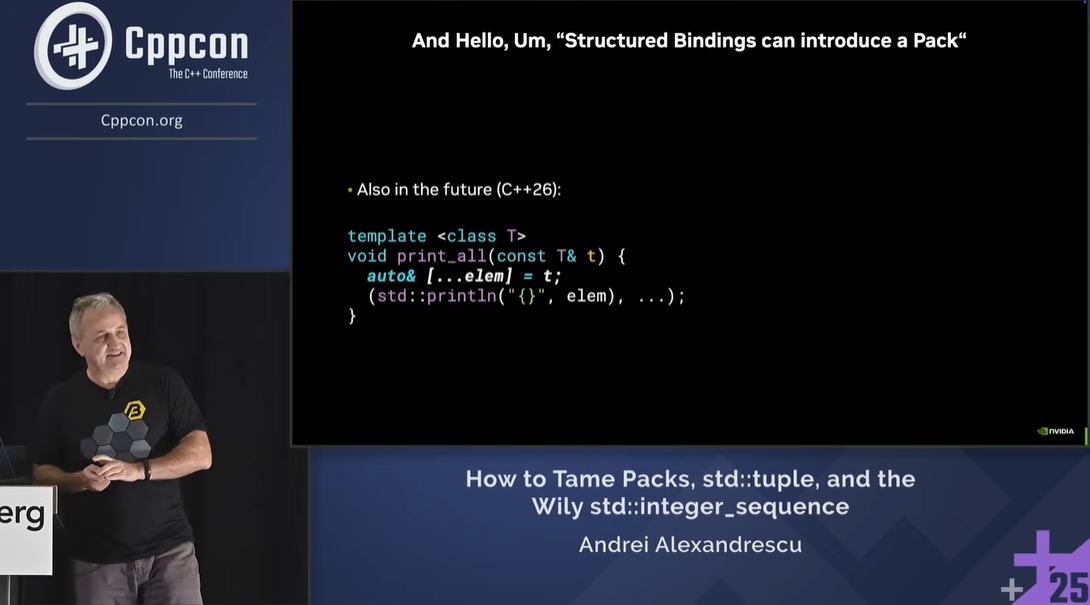
  Let’s continue our exploration of C++26 improvements. Today we focus on
  Registration is now open for CppCon 2026! The conference starts on September 12 and will be held
  GCC 16 is about to be released, so I'm sharing some of the new features I worked on this year. Some changes are visible to users, while others improve the system more subtly.
 Registration is now open for CppCon 2026! The conference starts on September 12 and will be held
